Science Shops: How Community Groups Get Free Research From Universities
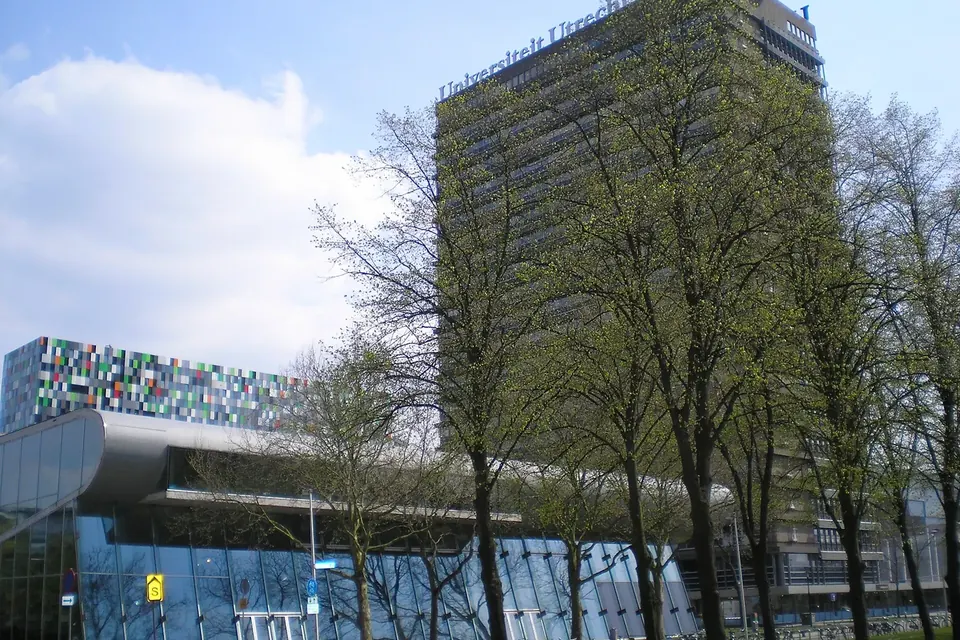
A science shop is not a shop and does not sell science. It is a small office, usually inside a university, that takes research questions from community groups, charities and residents and finds students and academics to answer them, typically free of charge. The model began in the Netherlands in the 1970s and remains one of the simplest ways for organisations without research budgets to get access to university expertise.
Origins
Science shops (in Dutch, wetenschapswinkels) emerged at Dutch universities in the 1970s, in a period of student activism and debate about the social responsibility of science. Students and staff wanted universities to serve groups such as trade unions, environmental organisations and residents' associations, who could not commission research. Science shops were established at many Dutch universities, covering fields from chemistry and biology to law and social sciences.
The idea spread to Germany, Denmark, France, the United Kingdom, Austria and other countries, and to some universities outside Europe. The European Commission supported science shops through its science-and-society programmes in the 2000s and 2010s, funding projects to create new shops and networks. The international Living Knowledge network connects science shops and community-based research centres and holds regular conferences.
How a science shop works
- A group brings a question. A residents' association wants to know whether noise from a new road exceeds limits; a charity wants to understand why some families do not use its services; a tenants' group wants to know its rights under a new law.
- The science shop clarifies the question. Staff help turn a concern into a researchable question, check that the group cannot pay for commercial research, and confirm that the results will be used for public benefit.
- The shop finds a match. It looks for a department, a supervisor and one or more students whose course requirements fit the question, for example a master's dissertation in environmental science or a social policy module.
- Research takes place. Students carry out the work over a term or academic year, meeting the group at agreed stages.
- Results are delivered. The group receives a report, often with a summary in plain language; students gain a real-world project and academic credit. Some results are also published academically.
What community groups should know
- Eligibility. Most science shops work with non-profit organisations and informal groups that cannot afford research, and expect results to be made public.
- Timing. Projects follow the academic calendar. A question submitted in spring may not start until the autumn term.
- Scope. Student projects suit well-defined questions. Large or urgent studies may need other funding.
- Involvement. The best results come when the group stays involved: meeting the student, giving access to people and places, and commenting on drafts.
- Use of results. Agree in advance how the findings may be used and published, especially if they relate to a dispute.
What universities gain
Science shops give students experience of real problems and of working with non-academic partners, skills valued by employers. They give academics new research questions and contacts. They also help universities demonstrate social engagement and, in the UK, can contribute to the evidence of research impact assessed in the Research Excellence Framework. On the other hand, science shops depend on small budgets and committed staff, and several have closed when funding ended.
Related models
Science shops are one of several ways universities organise community-driven research:
- Community-based research centres at universities in North America and elsewhere match community requests with faculty and students, often using service-learning courses.
- Community-University Research Alliances: Canada's Social Sciences and Humanities Research Council launched a programme under this name in 1999 to fund partnerships between universities and community organisations over several years.
- Knowledge exchange and public engagement units in UK universities, supported nationally by the National Co-ordinating Centre for Public Engagement.
- Law clinics and planning studios, in which students advise community clients under supervision.
Unlike many of these models, a science shop's distinctive feature is that the question comes from the community and the service is free. It is a modest but durable form of co-production.
Strengths and limitations
Science shops are low-cost, flexible and accessible to small groups. Their limitations are equally clear: student research varies in quality, timelines are fixed by the academic year, and the community's role can shrink to that of a client rather than a partner. Projects that build in regular contact, joint interpretation of results and follow-up tend to give communities more. Evaluating these outcomes, beyond counting completed projects, is discussed in our article on evaluating participatory research. In health, the equivalent route for patients and the public is public involvement in research.
How to find a science shop
Ask the research, knowledge exchange or public engagement office of a nearby university whether it runs a science shop or a similar community research service. National and international networks list member shops, and some universities advertise calls for community research questions each year. If none exists, a department with a strong interest in your topic may still welcome a well-defined question for a student project.
Sources
- Living Knowledge, the international science shop network.
- Social Sciences and Humanities Research Council of Canada, Community-University Research Alliances programme (launched 1999).
- Reports from European Commission-funded science shop projects, including PERARES (Public Engagement with Research and Research Engagement with Society).
- National Co-ordinating Centre for Public Engagement, resources on community-university partnerships.
 Co-production & impact
Co-production of knowledge, explained
From Elinor Ostrom to NIHR guidance and sustainability science: what co-production really requires, and how to tell it from consultation.
 Co-production & impact
Patient and public involvement in health research
Involvement, participation and engagement; the UK Standards, James Lind Alliance, PCORI and GRIPP2: how patients and the public shape health research.
 Co-production & impact
Evaluating participatory research
Process, outcomes and impact: frameworks and practical methods for showing what a participatory project actually changed.