Community-Led Housing Research: How Residents Study Their Own Neighbourhoods
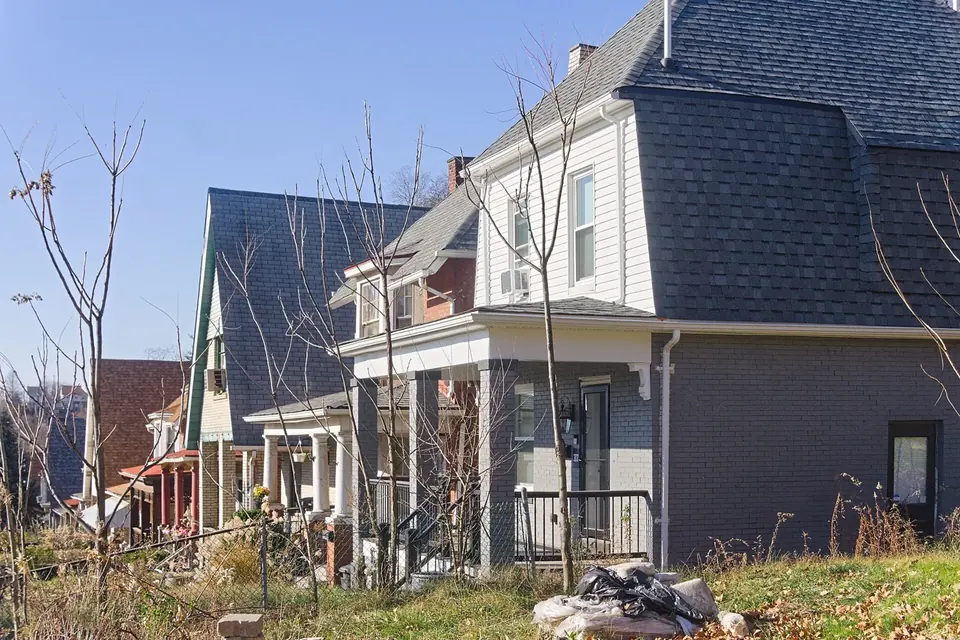
Residents know things about their housing that no statistic captures: which blocks have had damp for years, which landlords never answer, where rents have jumped, which homes stand empty and why. Community-led housing research turns that knowledge into evidence that councils, landlords, funders and courts take seriously. This guide explains how a residents' group can design and run its own study, from the first meeting to the presentation of results.
Why residents research their own housing
Official housing statistics are essential, but they are built for regions and cities rather than for streets. National surveys sample only a fraction of households across a whole country; census figures are detailed but taken only every ten years in many countries; administrative records count complaints only when people complain. Residents often find that the problems they live with are invisible in the numbers presented at public meetings, or that a landlord's account of an estate's condition does not match what they see every day.
Community-led research addresses that gap. It belongs to the family of participatory approaches in which the people affected by a problem take part in defining the question, collecting evidence and acting on it. In housing, it has been used by tenants' unions documenting repairs, by rural communities assessing local housing need, by public health partnerships tackling asthma triggers in homes, and by groups setting up community land trusts. The common thread is that residents are not only the subjects of the research: they decide what it is for.
Step 1: form a group and agree a question
A study needs a small core group willing to meet regularly for a few months, plus a wider circle of neighbours who will answer questions and help at key moments. Existing tenants' associations, residents' committees, faith groups and community centres are natural starting points. Make the first meetings open and listen before proposing a plan.
A useful warm-up for a new group is for each member to browse the homes for rent in their own neighbourhood as if they were about to move there, noting what a newcomer would see first, from asking prices and what the listings leave out to how far the bus stop really is, because that outsider's view is often the one the study will need to confirm or challenge.
Then narrow the focus. Good questions are specific, matter to residents and can be answered with the time and skills available. For example:
- How many homes on our estate have damp or mould, and how long have repairs been outstanding?
- What do private tenants on these five streets pay, and how much have rents changed since their tenancy began?
- How many homes in the village are empty or used as second homes, and how many local families need affordable housing?
- Which streets feel unsafe to walk at night, and what would change that?
Write the question down, along with who the findings are meant to reach: the council's housing committee, a housing association board, a regulator, a funder for a community-led scheme, or the residents themselves.
Step 2: see what official data already say
Before knocking on any door, spend an evening with the public statistics for your area. They provide context, help you design your questions and give you comparison points that make your own findings more credible.
- In the United States, the Census Bureau's American Community Survey publishes five-year estimates down to census tracts and block groups, including tenure, rent levels, rent as a share of income, overcrowding and the age of housing. The Department of Housing and Urban Development publishes Fair Market Rents by area, and many cities publish code enforcement and eviction filing data.
- In England, the English Housing Survey gives national and regional figures on housing conditions, including damp and the share of homes failing the Decent Homes Standard, which help put local findings in perspective. Census 2021 results are published for small areas, and Energy Performance Certificate data for individual buildings are available as open data.
- Elsewhere, national statistics offices and city governments publish similar data. Local housing registers, planning applications and council committee papers are often public too.
Note the limits: margins of error on small-area estimates, the date of each dataset, and what is not measured at all. These gaps are where your own research adds most value.
Step 3: choose methods residents can use well
Door-to-door condition surveys
A short questionnaire, completed on the doorstep or left with a return envelope, can document conditions across an estate or a street. Keep it to one or two pages: type of home and tenure, problems present (damp, mould, cold, leaks, pests, broken heating, unsafe electrics, overcrowding), how long each problem has lasted, whether it has been reported, and the landlord's response. Use tick boxes where possible and one or two open questions at the end. Test it on a few neighbours first and rewrite anything that confused them.
Plan coverage. Visiting every home on a small estate is ideal; on a larger area, agree a systematic approach (every home on selected streets, or every third door) and record which homes were visited, which declined and which were empty. That record lets you report a response rate, the first thing a sceptical reader will ask about.
Rent and tenure surveys
Rents are often the hardest information to obtain, and the most contested. A confidential survey of what tenants pay, what is included, when the tenancy began and how the rent has changed can reveal patterns that asking prices do not. Ask about bands rather than exact amounts if people are reluctant, and never publish figures that could identify a household.
Walking audits and photographs
Walking a planned route with residents and recording what they point out, such as broken lighting, unsafe stairwells, rubbish, blocked drains or valued green spaces, captures conditions that questionnaires miss. Photographs make findings vivid. Some groups use photovoice, in which residents photograph their own surroundings and discuss the pictures together before choosing which to show decision-makers.
Maps
Plotting survey results, photographs and walking-audit notes on a map shows where problems cluster. A printed street map and coloured stickers are enough for a first workshop; free mapping software can follow. Our guide to participatory mapping explains the techniques and the precautions needed before publishing locations.
Stories and oral histories
Short recorded interviews, with consent, give depth to the numbers: how a family has coped with years of mould, how a street has changed as older residents left. Pair each finding with one or two stories, chosen with the people who told them.
Housing needs surveys
In rural areas and small towns, residents often carry out housing needs surveys to show how many local households need affordable homes and of what size. In England, such surveys are commonly used as evidence for neighbourhood plans, which the Localism Act 2011 allows communities to prepare and which come into force only after a local referendum, and for community-led schemes such as community land trusts.
Traditions to learn from
Resident-led housing research has a long history, and several traditions offer models.
- Healthy homes and community health workers. The Seattle-King County Healthy Homes Project, published as a randomised trial in the American Journal of Public Health in 2005, trained community health workers to visit the homes of low-income children with asthma, assess asthma triggers and help families reduce them. Similar programmes have used residents' knowledge of their own homes as a core part of the assessment.
- Community land trusts. The model of community ownership of land for permanently affordable housing is usually traced to New Communities Inc., founded in 1969 near Albany, Georgia, by civil rights activists. The Burlington Community Land Trust in Vermont, founded in 1984, became one of the best-known urban examples; in 2006 it merged with the Lake Champlain Housing Development Corporation to form the Champlain Housing Trust. In England, community land trusts have a statutory definition in section 79 of the Housing and Regeneration Act 2008. Groups setting up a land trust typically begin with their own research on local need, land and costs.
- Tenants' organising and counter-mapping. Tenants' unions in many cities document repairs, evictions and rent increases to support collective action. In San Francisco, the Anti-Eviction Mapping Project, a volunteer collective founded in 2013, has combined eviction data, oral histories and maps to document displacement.
Working with a university or research partner
Many groups run their research entirely on their own. Others work with a university department, a public health team or a local charity that offers methodological advice, training, data analysis or ethics review. A good partner helps the group answer its question without taking it over. Agree in writing who owns the data, who decides what is published and how residents' time will be paid or recognised. University science shops and community engagement offices can be a first point of contact, and our ethics section covers partnership agreements in detail.
Ethics and safety: protect the people who take part
Housing research carries specific risks. Tenants who report disrepair may fear retaliation from a landlord, such as a rent increase, refusal to renew a tenancy or eviction. Legal protection against retaliatory eviction exists in many places but varies widely, and people may not trust it. Precautions include:
- Informed consent: explain what the study is for, who will see the results, and that taking part is voluntary.
- Anonymity: do not record names on questionnaires; keep any contact list separate and secure.
- Aggregation: report results by block or street, not by address, and avoid figures based on very few households.
- Secure storage: decide who holds the completed forms and digital files, and for how long.
- Safety for surveyors: work in pairs, carry identification from the group, and agree what to do if someone discloses abuse or danger.
- Advice routes: carry information about local advice services, since surveys often uncover urgent problems.
Be careful, too, about how findings are framed. A report that presents a neighbourhood only as a list of failings can add to stigma. Many groups present problems alongside the strengths residents value.
From findings to change
Evidence persuades when it is clear, honest about its limits and linked to a specific request. Practical steps:
- Analyse together. Hold a session where the group reads the results, checks surprising findings and agrees the main messages.
- Write a short report. Four to eight pages: the question, the methods, the response rate, the main findings with a few charts, a map, a handful of photographs and quotes, and clear requests.
- Return results to residents first. A public meeting or a poster session lets neighbours check and add to the findings before they go further.
- Take it to decision-makers. Ask for a slot on a council committee agenda, a meeting with the landlord or housing association, or a hearing with the regulator. In England, for example, new legal requirements on social landlords to deal with damp and mould, known as Awaab's Law after the death of two-year-old Awaab Ishak in Rochdale in 2020, began to apply in October 2025, and documented evidence of outstanding problems is directly relevant to them.
- Repeat. A second survey a year later shows whether promised improvements happened.
A checklist before you start
- A clear question and an intended audience.
- A core group with agreed roles and a simple way of making decisions.
- Official data gathered for context.
- Methods tested on a few neighbours.
- Consent, anonymity and data storage agreed.
- A plan for returning results to residents and presenting them to decision-makers.
- A budget, even a small one, for printing, refreshments and people's time.
Sources
- US Census Bureau, American Community Survey, five-year estimates and small-area data products.
- US Department of Housing and Urban Development, Fair Market Rents.
- Ministry of Housing, Communities and Local Government, English Housing Survey.
- Housing and Regeneration Act 2008, section 79 (definition of community land trust); Localism Act 2011 (neighbourhood planning).
- James W. Krieger et al., "The Seattle-King County Healthy Homes Project: a randomized, controlled trial of a community health worker intervention to decrease exposure to indoor asthma triggers", American Journal of Public Health, vol. 95, no. 4, 2005, pp. 652-659.
- John Emmeus Davis (ed.), The Community Land Trust Reader, Lincoln Institute of Land Policy, 2010.
- Social Housing (Regulation) Act 2023 (Awaab's Law) and the associated regulations for social landlords in England.
 Methods
Participatory mapping, from sketch maps to GIS
Sketch maps, transect walks, GPS and open mapping: how residents put their own knowledge on the map, and when a map can do harm.
 Methods
Photovoice, step by step
Cameras, group discussion and an exhibition for decision-makers: how to run a photovoice project, from training to ethics.
 Ethics & partnerships
Writing a community-university partnership agreement
Governance, money, data, authorship and exit: the clauses that keep research partnerships between universities and community groups fair.